Zurück zur Startseite

An interactive data story

From Fork to Field

The meat on your plate carries a hidden geography — a chain of animals, crops, and land stretching from your dinner table to the other side of the world. This story traces one link in that chain: the soy in your animal's feed, and the forest it replaces.

Scroll to begin

Case study

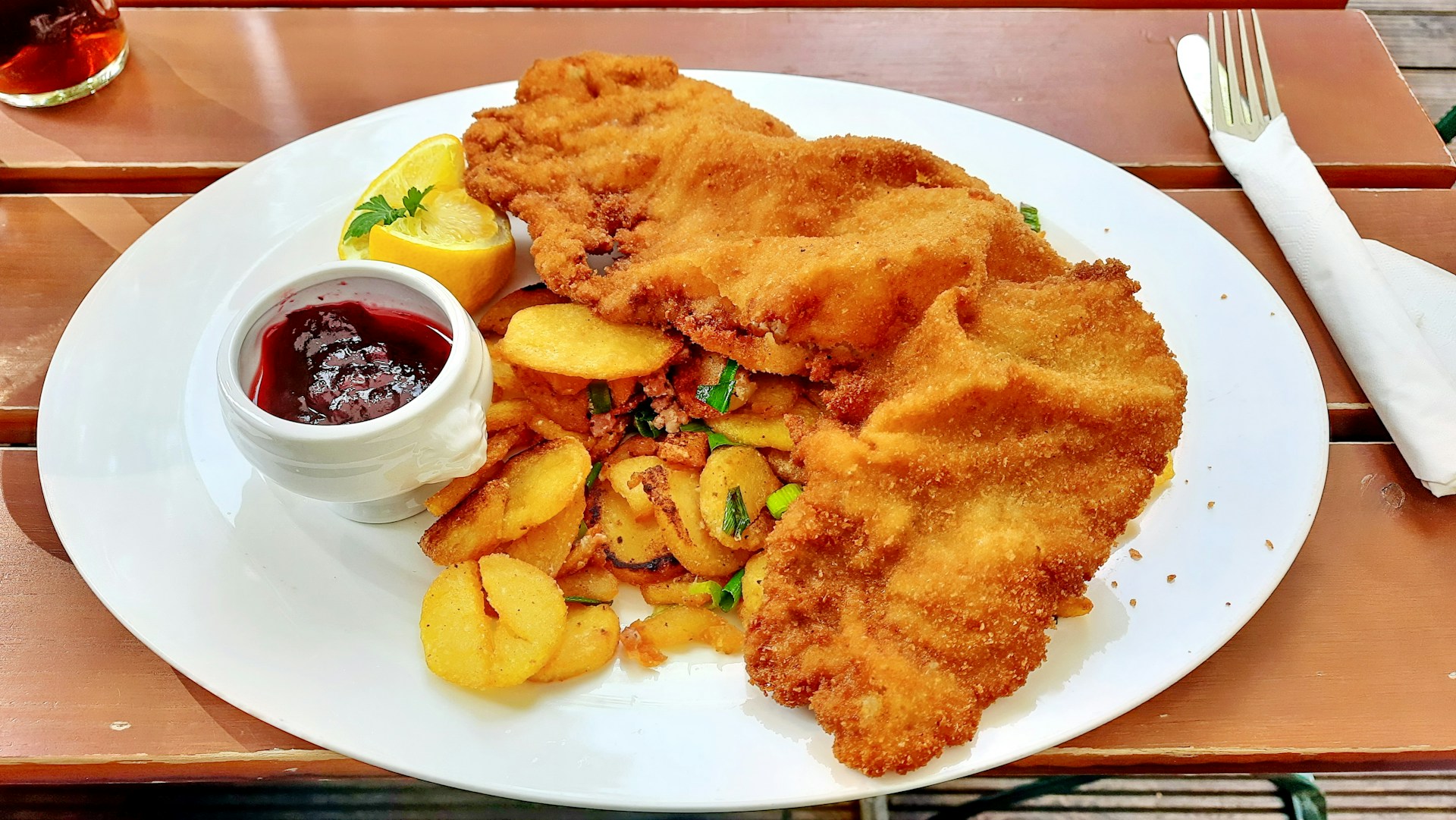
Austria & Pork — how far does your Schnitzel travel?

This story follows a single supply chain: pork consumed in Austria. As our environmental lens we use land use — the area of agricultural land, in m², required to produce one kilogram of meat. From the farm gate in Central Europe all the way to the soy fields of South America, every link in that chain leaves a footprint on the land.

The invisible supply chain

Every meal built around meat is also built around feed — the crops that raised the animal. These crops travel thousands of kilometres, crossing borders and oceans before they ever reach a farm.

Meal
Beef Steak

Tonight's dish: Beef Steak

Behind this plate lies a chain of production stretching far beyond the kitchen.

Before the meal…

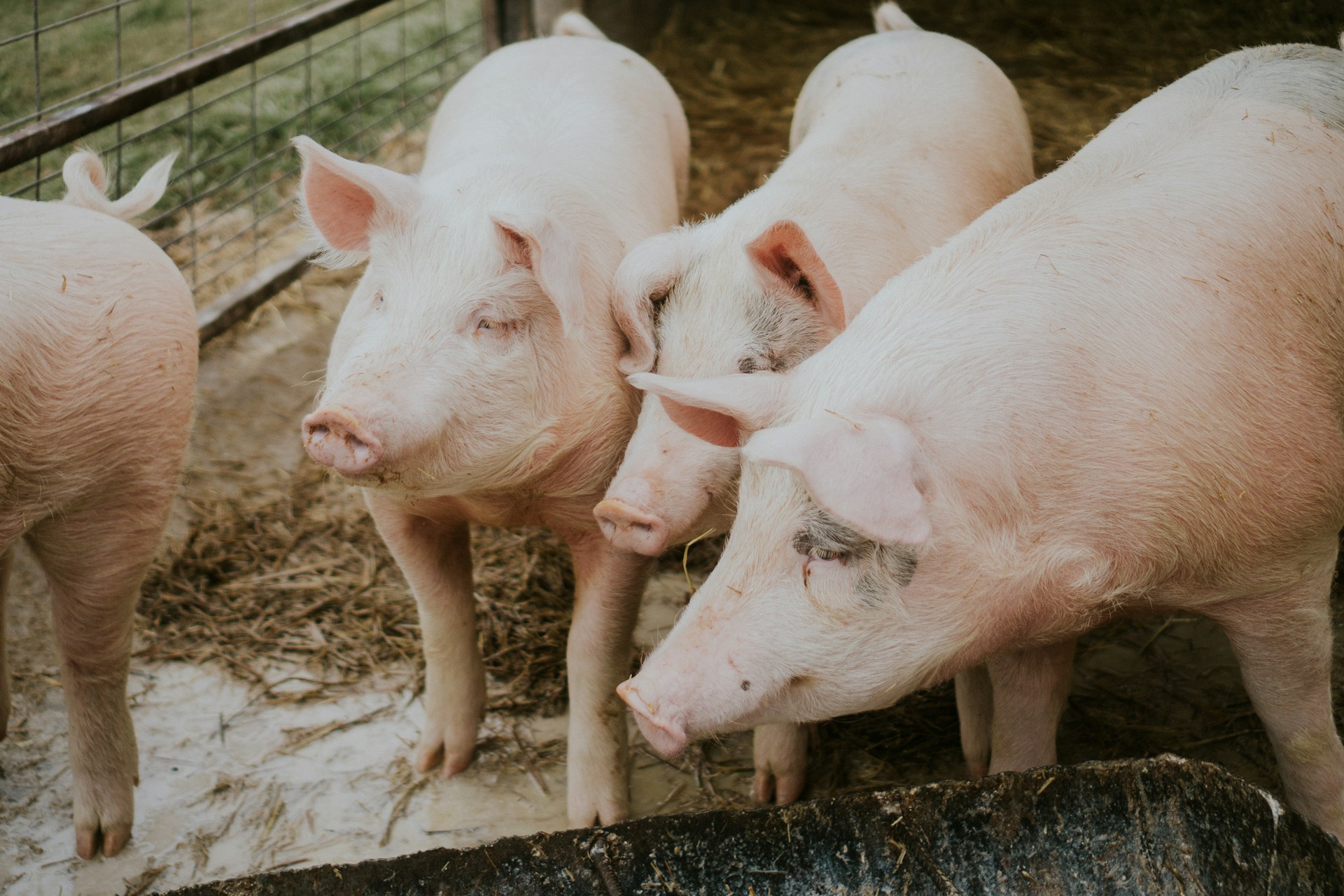
…there was a cattle. Raising it required enormous quantities of feed crops, harvested across multiple countries.

What did it eat?

The largest single protein component: soy. A cheap, high-protein crop that dominates global animal feed — and is grown overwhelmingly in one place.
But where does the soy come from?

Soy is the backbone of industrial animal feed. Yet for most European countries, virtually none of it is grown domestically. The map below traces the global web of feed imports — from the farms of Central Europe all the way to the Amazon.

Spotlight: Austria

Let's follow the feed imports that arrive here each year.

Maize imports

Maize is the biggest single feed crop by volume. The top suppliers for Austria are mostly regional — neighbouring countries with large agricultural surpluses.

Only part of the story

Maize travels hundreds of kilometres — but other feed components have their own, sometimes longer, journeys.

Other feed imports

Wheat, barley, and feed by-products round out the diet. Most come from within Europe — but the picture is about to change dramatically.

Now: the ingredient that travels furthest.

Soy protein is irreplaceable in high-efficiency feed formulas. It is largely imported from South America.

Soy origins

The majority of soy used in Austrian animal feed is grown in Brazil — over 10,000 km away.

Focus: Brazil

Brazil alone accounts for the majority of soy exports worldwide. The expansion of soy farming is one of the primary drivers of deforestation in the Amazon and the Cerrado.

Where soy grows

Each cell shows the area of land used for soy cultivation. The darker the cell, the more soy is grown there — concentrated in the Cerrado and southern Brazil.

Brazil — the world's soy heartland

Brazil is the world's largest soy producer and exporter. In the state of Mato Grosso alone, soy plantations cover more than 10 million hectares — an area larger than South Korea. Much of this land was once part of the Amazon or the Cerrado savannah.

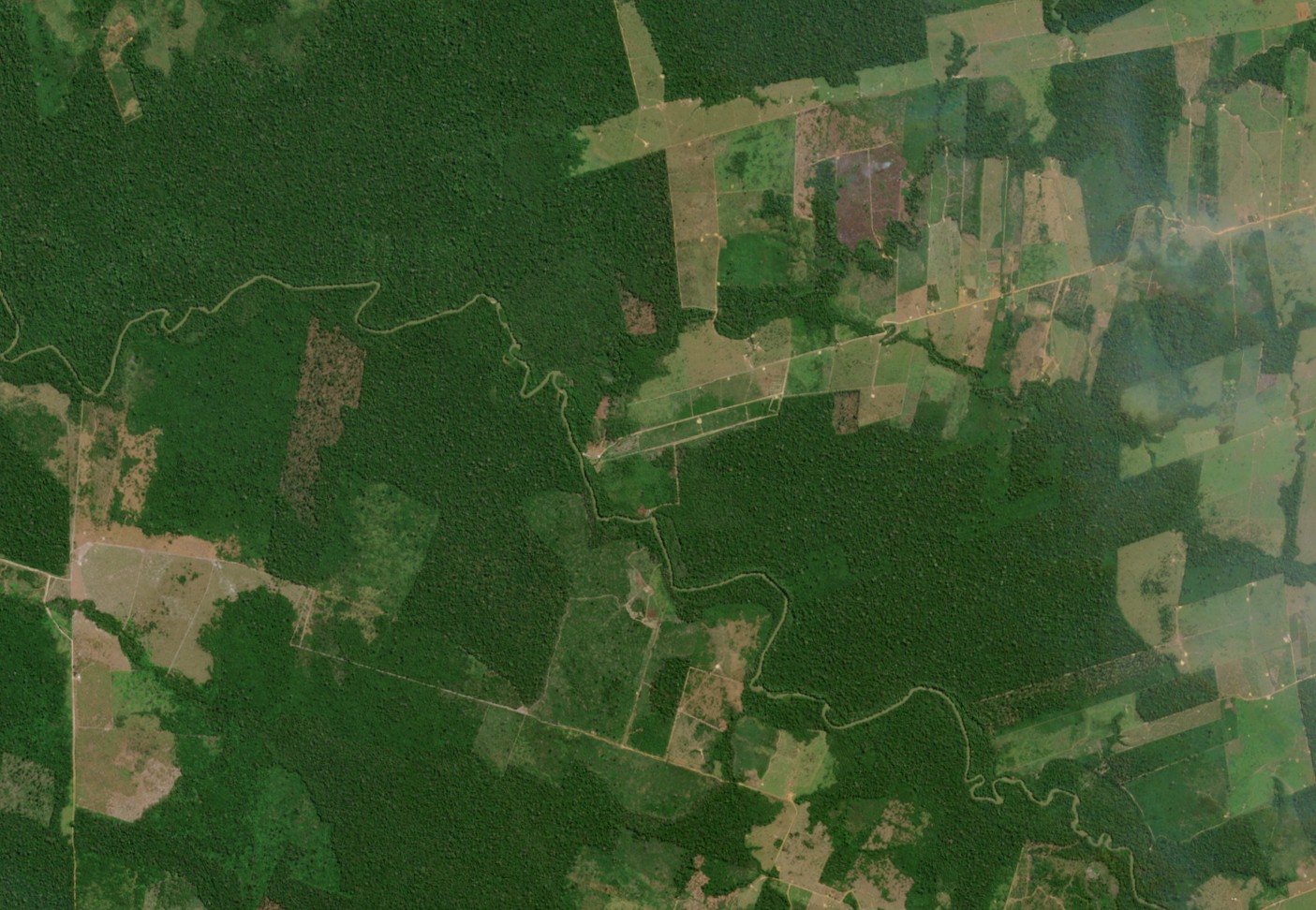
Healthy Amazon rainforest
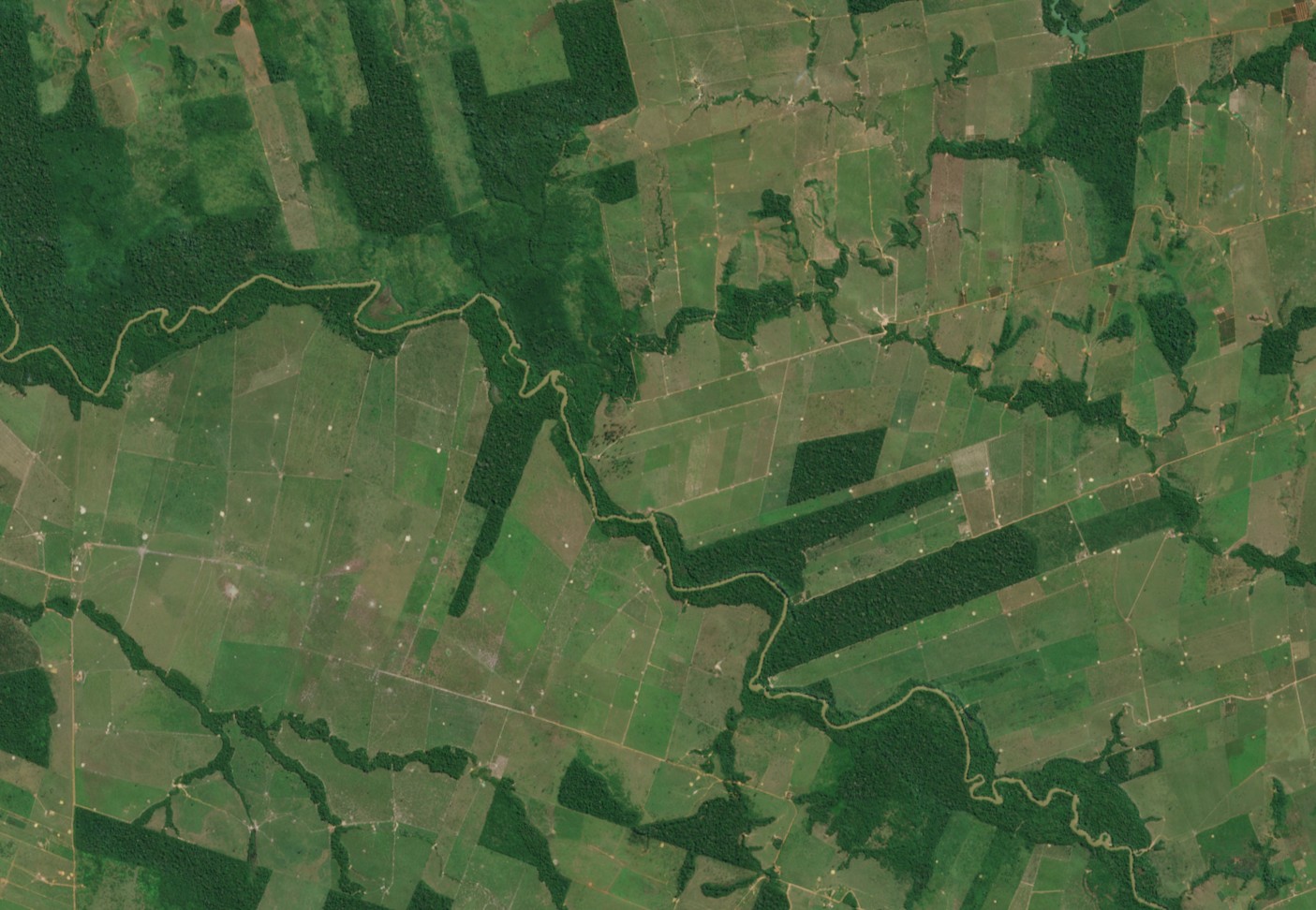
Copernicus Sentinel data 2016, 2026

The Amazon

Brazil's Amazon is the world's largest tropical rainforest — home to an estimated 10% of all species on Earth. It is also one of the most important carbon sinks on the planet.

A forest in retreat

Since 1985, Brazil has lost over 50 million hectares of native vegetation. Agricultural expansion — driven primarily by soy and cattle — accounts for the vast majority of this loss.

Every meal is a land-use decision.

The journey from your plate back to a forest in Brazil is long — but the links in the chain are real and measurable. Understanding them is the first step towards food systems that work within planetary boundaries.